
Exclusive Offer: Enjoy Free CARA for All Users
Phobia Assessment Test
Take our clinically validated assessment to understand your specific phobia symptoms. Whether you fear heights, spiders, flying, or enclosed spaces, sign up for free to get instant results and personalized recommendations.
Clinically Validated
5-7 Minutes
Instant Results
What is a Specific Phobia?
A specific phobia is an intense, irrational fear of a particular object or situation that poses little actual danger. It causes significant distress and leads to avoidance behaviors that can interfere with daily life.
Why Self-Assess?
Self-assessment helps you understand the severity of your phobia symptoms. Recognizing when fear becomes excessive allows you to seek effective treatment and regain control over your life.
Your Privacy Matters
Your responses are completely confidential and securely stored. Track your progress over time and share results with your care provider when you choose to.
About the Specific Phobia Assessment
This assessment measures the severity of your phobia symptoms based on your experiences over the past 7 days with a specific feared situation.
What the Test Measures
Sudden terror, fear, or fright in feared situations
Physical symptoms (racing heart, sweating, trouble breathing)
Avoidance and escape behaviors
Anxious thoughts about injury or bad outcomes
Reliance on coping aids (substances, objects, people)
Understanding Your Score & Recommended Support
0-10
Minimal Phobia
Self-Help Strategies
11-20
Mild Phobia
CARA + Self-Exposure
21-30
Moderate Phobia
Professional Therapy
31-40
Severe Phobia
Intensive Treatment
Common Types of Specific Phobias
Animal
Spiders, snakes, dogs, insects
Natural Environment
Heights, storms, water, darkness
Blood-Injection-Injury
Needles, blood, medical procedures
Situational
Flying, elevators, enclosed spaces
Other
Choking, loud sounds, vomiting
Introducing CARA - Your AI Wellness Companion
CARA (Culturally Aware Roadmap for All) supports your journey to overcome phobias. CARA creates personalized weekly wellness roadmaps that include relaxation techniques, gradual exposure exercises, and anxiety management strategies tailored to your specific fears.
For moderate to severe phobias, CARA works alongside professional exposure therapy to reinforce your progress with daily coping exercises, mindfulness practices, and culturally-informed support.
✨ Good News: Phobias Are Highly Treatable
Specific phobias are among the most treatable anxiety disorders. With evidence-based treatment like exposure therapy:
90%+
Success rate with exposure therapy
8-12
Sessions typically needed
Long-lasting
Results are maintained over time
Understanding Specific Phobias: A Complete Guide
Learn about the nature of phobias, their causes, symptoms, and the most effective treatment approaches available today.
What Exactly Is a Specific Phobia?
A specific phobia is an intense, irrational fear of a particular object or situation that poses little or no actual danger. Unlike general anxiety, phobias are focused on specific triggers and can cause immediate, overwhelming fear responses. According to the DSM-5, specific phobias are diagnosed when the fear persists for six months or more and significantly interferes with daily functioning.
People with specific phobias recognize that their fear is excessive, yet they feel powerless to control it. The anxiety can be so severe that individuals go to great lengths to avoid the feared object or situation, which can limit their personal and professional lives. For example, someone with a flying phobia might turn down job opportunities requiring travel, while someone with a needle phobia might avoid necessary medical care.
Specific phobias affect approximately 12.5% of adults in the United States at some point in their lives, making them one of the most common mental health conditions. Women are twice as likely as men to develop specific phobias, and symptoms typically begin in childhood or adolescence, though they can develop at any age.
The Five Categories of Specific Phobias
1. Animal Type Phobias
Fear of spiders (arachnophobia), snakes (ophidiophobia), dogs (cynophobia), or insects. These phobias typically begin in early childhood and may be evolutionarily rooted in survival instincts.
2. Natural Environment Type
Fear of heights (acrophobia), storms (astraphobia), water (aquaphobia), or darkness (nyctophobia). These often develop in childhood and relate to natural elements that could pose danger.
3. Blood-Injection-Injury Type
Fear of needles (trypanophobia), blood (hemophobia), or medical procedures. Unique because it can cause fainting due to a sudden drop in blood pressure, unlike other phobias which increase heart rate.
4. Situational Type
Fear of flying (aviophobia), enclosed spaces (claustrophobia), elevators, or driving. These often develop in the mid-20s and may be linked to panic disorder.
5. Other Type
Fears that don't fit the above categories, such as fear of choking, loud sounds, vomiting (emetophobia), or costumed characters. These can develop from traumatic experiences.
What Causes Phobias? Understanding the Origins
Phobias develop through a complex interaction of genetic, neurological, and environmental factors. Research suggests that specific phobias often result from a combination of the following causes:
Traumatic Experiences
A frightening encounter with the feared object or situation can trigger a phobia. For example, being bitten by a dog may lead to cynophobia, or being trapped in an elevator could cause claustrophobia.
Learned Behaviors
Children often learn phobias by observing family members' fearful reactions. If a parent shows extreme fear of spiders, a child may develop the same phobia through modeling.
Genetic Predisposition
Studies show that anxiety disorders, including phobias, run in families. Having a first-degree relative with a phobia increases your risk of developing one yourself.
Brain Chemistry
The amygdala, the brain's fear center, may be overactive in people with phobias. This can cause exaggerated fear responses to stimuli that others perceive as harmless.
How Exposure Therapy Works: The Gold Standard Treatment
Exposure therapy, particularly systematic desensitization and prolonged exposure, is the most effective evidence-based treatment for specific phobias. This approach is based on the principle that avoidance maintains fear, while gradual, controlled exposure helps the brain learn that the feared object or situation is not actually dangerous.
1️⃣
Fear Hierarchy
You and your therapist create a ranked list of feared situations, from least to most anxiety-provoking.
2️⃣
Gradual Exposure
Starting with the least frightening scenario, you're gradually exposed to the feared object or situation.
3️⃣
Habituation
Through repeated exposure, your anxiety naturally decreases as your brain learns the situation is safe.
Virtual reality exposure therapy (VRET) is an innovative approach that uses computer-generated environments to simulate feared situations. This is particularly effective for phobias like fear of flying, heights, or public speaking, where real-world exposure may be impractical or too expensive. Studies show VRET is as effective as traditional exposure therapy.
When to Seek Professional Help
While many people live with mild phobias without treatment, you should consider seeking professional help if your phobia:
Causes you to avoid important activities, places, or situations
Interferes with your work, school, or relationships
Has lasted for six months or longer
Causes intense anxiety or panic attacks
Leads you to avoid necessary medical care or prevents you from living fully
Remember: Phobias are highly treatable, and seeking help is a sign of strength, not weakness. With proper treatment, most people experience significant improvement and can face their fears with confidence.
Related Mental Health Resources
Phobias often co-occur with other anxiety disorders. Explore our other assessment tools to get a complete picture of your mental health:
Why Create a Free Account?
Get the support you need to understand and overcome your specific phobia
Personalized Recommendations
Based on your results, receive tailored recommendations and resources to help you manage your phobia and reduce avoidance behaviors.
Access to Professionals
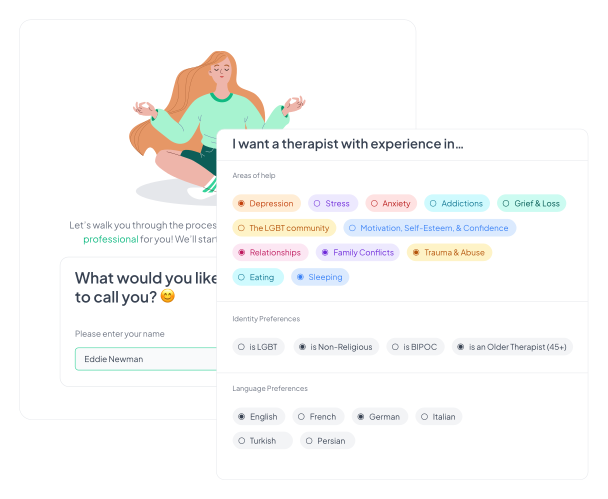
Connect with licensed therapists who specialize in exposure therapy and CBT for effective phobia treatment.
Multiple Assessments
Access a variety of mental health assessments including anxiety, depression, and more to get a complete picture of your wellbeing.
0+
Chose Happiness
0+
Areas of Expertise
0+
Licensed Therapists
0+
Languages Used
How It Works?Start your journey to overcome your phobia in three simple steps.
Create Your Free Account
Sign up in less than a minute. Your information is secure and confidential. Once registered, you can access all our mental health assessments from your personal dashboard.

Take the Phobia Assessment
Complete the assessment in about 5-7 minutes. Think about the specific situation that causes you fear and answer honestly about your experiences over the past week.

Get Support If Needed
Based on your results, connect with licensed therapists who specialize in exposure therapy and CBT for phobias. Schedule appointments easily through your dashboard.
Ready to face your fears?
Phobias are highly treatable. Take the first step toward freedom from fear. Create your free account today and complete the phobia assessment in just 5-7 minutes.
Sign Up FreeReady to face your fears?
Phobias are highly treatable. Take the first step toward freedom from fear. Create your free account today and complete the phobia assessment in just 5-7 minutes.
Sign Up FreeFrequently asked questions
These answers offer a starting point for understanding phobia assessments. For more detailed advice tailored to your individual circumstances, please consult with a professional therapist by making an appointment with one of our providers.